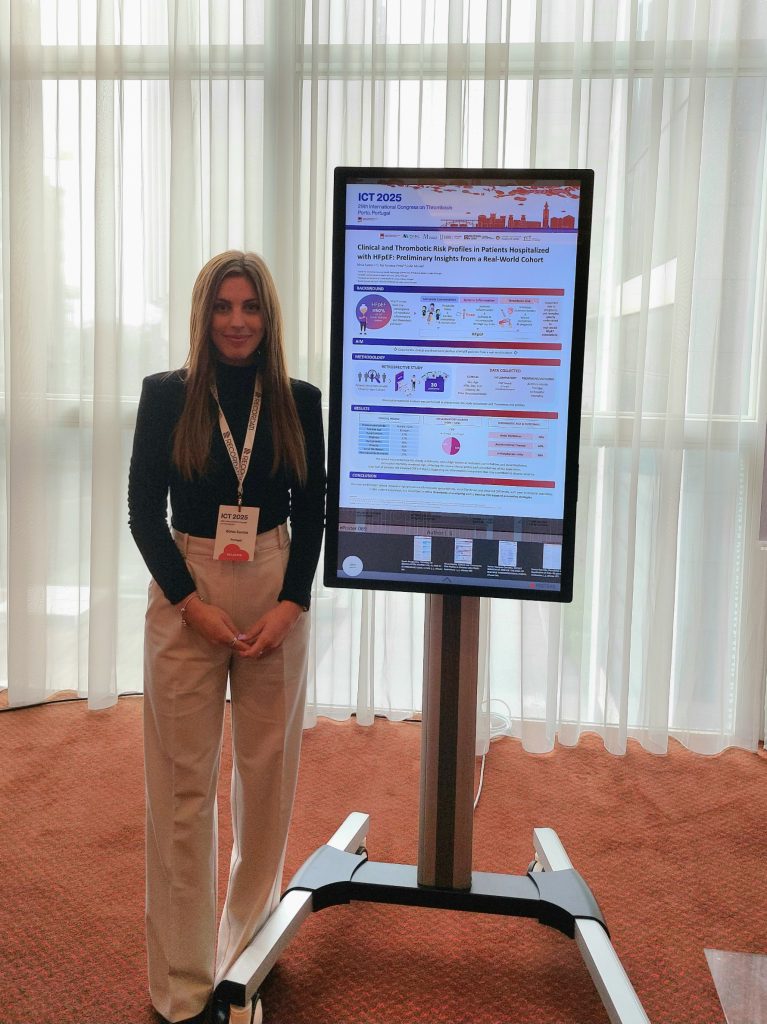
The abstract “Clinical and Thrombotic Risk Profiles in Patients with HFpEF: Preliminary Insights from a Real-World Cohort”, from Sónia Santos, a PhD student in Biomedical Sciences focusing on the study of Heart Failure, Rui Fonseca Pinto and João Morais was one of the works selected for the e-poster exhibition at the 29th International Congress on Thrombosis, held in Porto on 6, 7, and 8 November. The president of the executive committee was João Morais, a researcher at ciTechCare and current president of the European and Mediterranean League Against Thrombotic Diseases (EMLTD).
The presented work consisted of a preliminary analysis of patients with heart failure with preserved ejection fraction (HFpEF), focusing on clinical variables and markers associated with thrombotic risk. The study explored the prevalence of common comorbidities in this population (such as arterial hypertension, diabetes, obesity, and dyslipidemia) and characterized relevant factors for thrombotic risk, including the presence of atrial fibrillation (an important determinant of thromboembolic risk) and the use of antithrombotic therapy. In-hospital mortality was also described from an exploratory perspective, contributing to a better understanding of the clinical profiles associated with HFpEF.
This abstract, part of Sónia Santos’ PhD project, which aims to understand the clinical heterogeneity of HFpEF and contribute to a more stratified and risk-oriented approach in this population, presented preliminary data based on a small sample. Although definitive conclusions cannot yet be drawn, the results provide useful insights that may support more robust analyses in the upcoming phases of the project.
The scientific program predominantly addressed topics such as mechanisms of atherothrombosis, thrombotic risk in cardiovascular diseases, and personalized antithrombotic strategies, enabling the sharing of recent findings and fostering the exchange of knowledge.