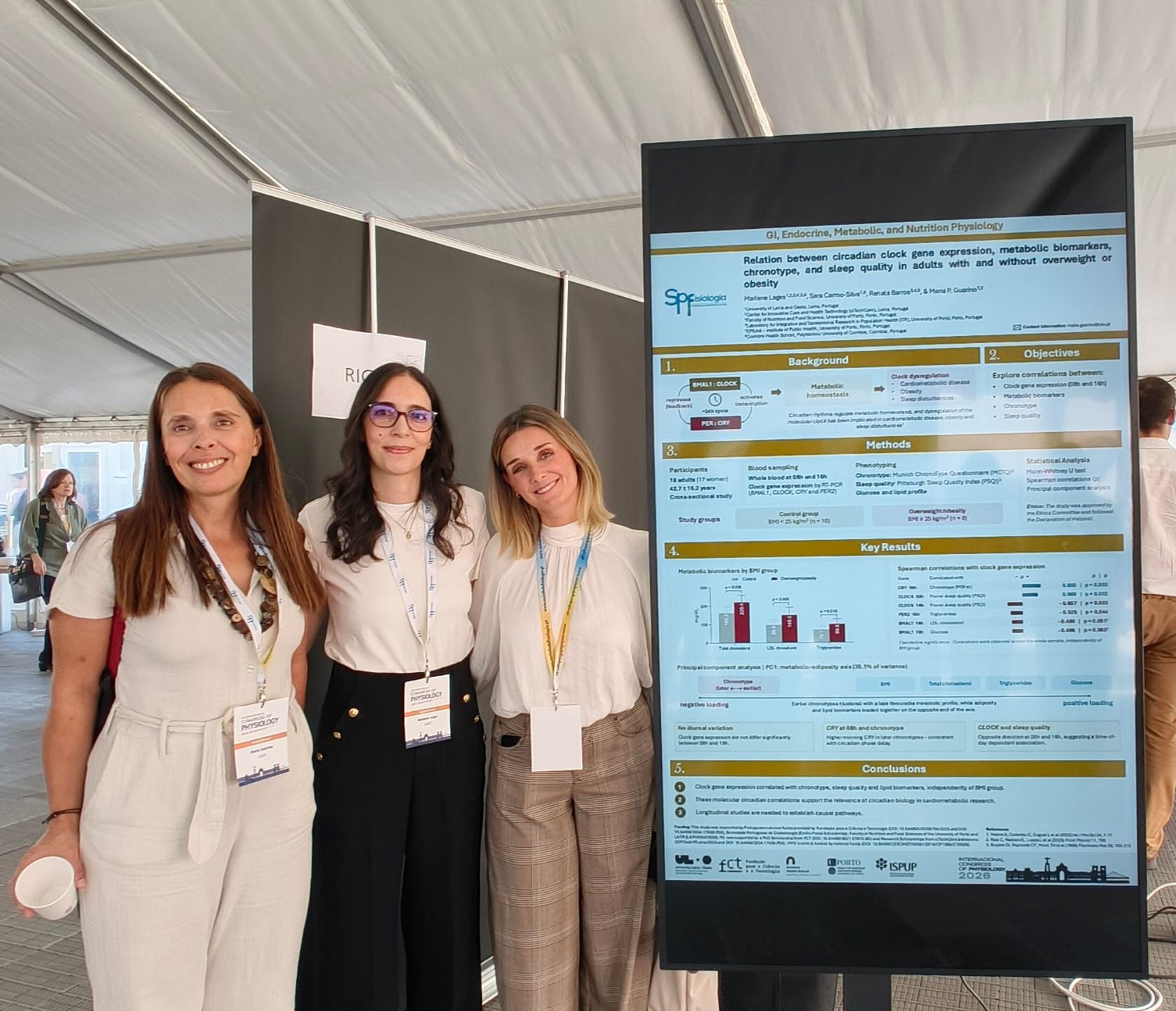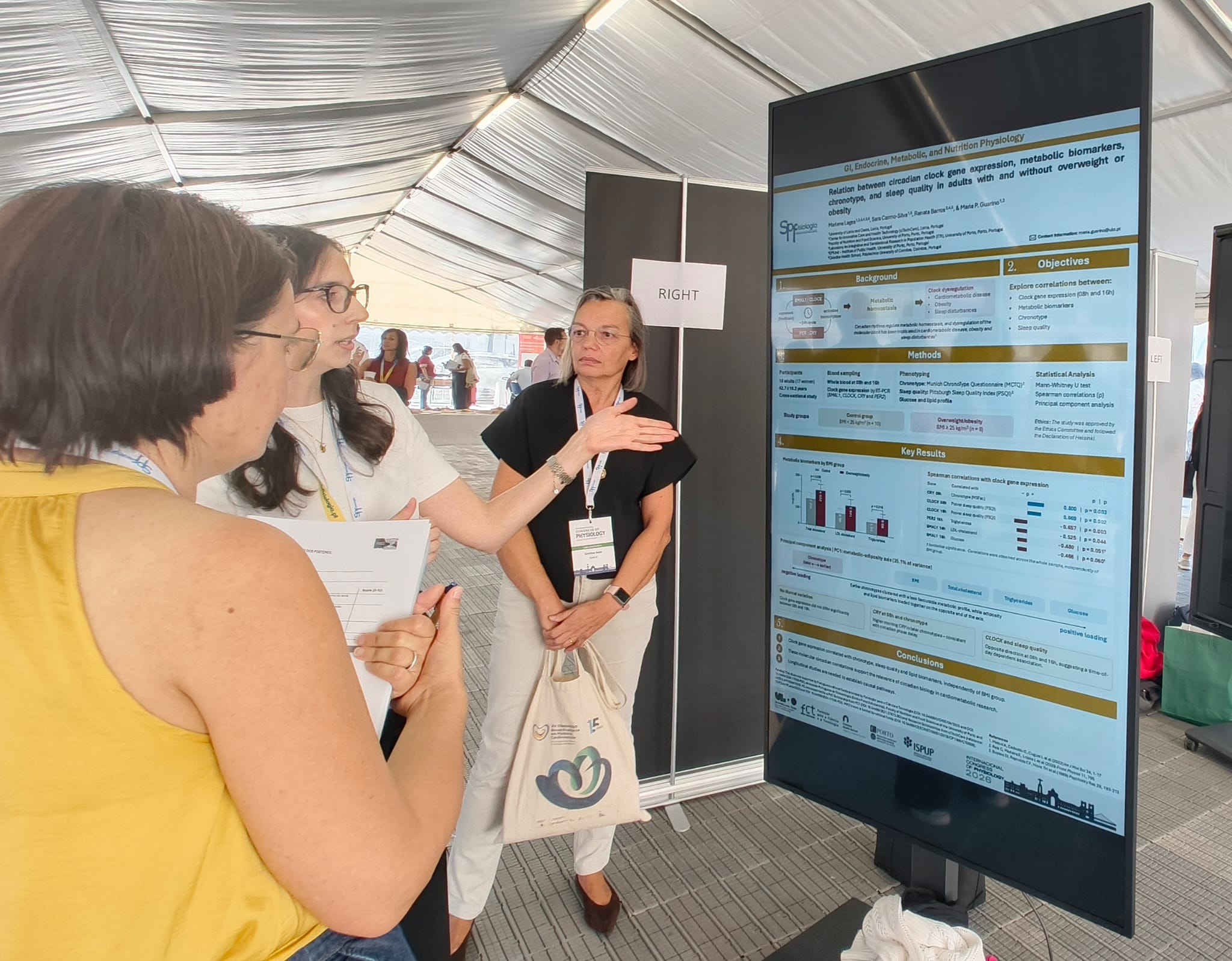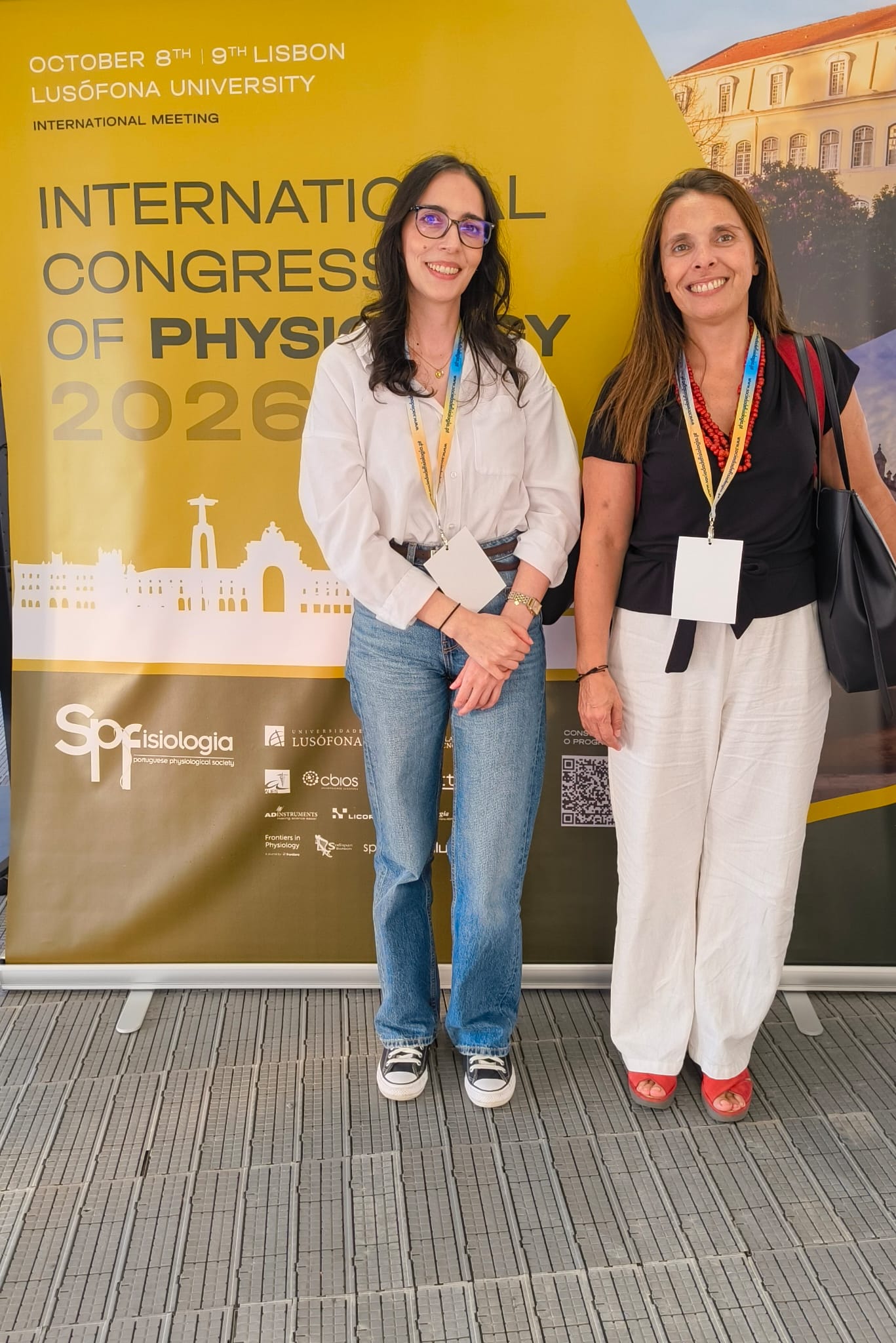
Maria Guarino and Marlene Lages, researchers at ciTechCare, took part in the 4th International Congress of the Portuguese Physiological Society (SPF), held at Lusófona University, in Lisbon, on 8 and 9 October 2026, where both co-authored and presented two posters, focusing on the interplay between circadian biology and metabolic health.
The first poster entitled ‘Relation between circadian clock gene expression, metabolic biomarkers, chronotype, and sleep quality in adults with and without overweight or obesity’, also co-authored by Sara Carmo-Silva e Renata Barros explored how the molecular clock relates to the metabolic and behavioural profile of adults. In this exploratory study, clock gene expression was associated with chronotype, sleep quality and lipid biomarkers, supporting the relevance of circadian biology in cardiometabolic research.
Building on this, the second poster ‘Meal Timing, Circadian Rhythms and Clock Gene Expression by Weight Status’, also written by Marisa Ferreira-Marques, Armando Caseiro, Rui Pinto, Sara Urbano, Natacha Oliveira, Joana Correia, Salvador Mota, Renata Barros e Sara Carmo-Silva compared adults with normal weight and adults with overweight or obesity. The results suggest that adults with overweight or obesity show signs of circadian misalignment, including trends towards higher morning cortisol, lower nocturnal melatonin and altered clock gene expression. The relationship between fasting duration and clock gene expression seen in normal-weight participants was absent in the overweight or obesity group, pointing to a role for meal timing in circadian alignment.
These early findings add to growing evidence that when we eat, and not only what we eat, is linked to metabolic health. They also highlight the need for larger studies to find out whether adjusting meal timing could help prevent and manage overweight and obesity.
The congress was also a valuable opportunity to exchange ideas with colleagues in the Portuguese physiology community and also physiologists, life-science researchers, educators and students from Portugal and abroad. The congress counted on the Brazilian Society of Physiology (SBFis) and the Federation of European Physiological Societies (FEPS) presence.