Promoting health in school settings is a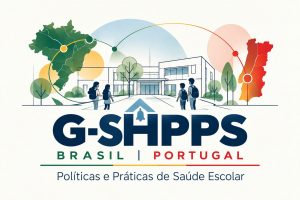 strategic priority in public health and education policies in both Brazil and Portugal. It is recognised as essential to the holistic development of children and adolescents. In Brazil, the School Health Programme (Programa Saúde na Escola – PSE), established in 2007, aims to contribute to the holistic development of students in the public education system through coordinated health promotion, prevention and care initiatives designed to address vulnerabilities that hinder the full development of children and young people (Ministry of Health, 2007).
In Portugal, the National School Health Programme (Programa Nacional de Saúde Escolar – PNSE), coordinated by the Directorate-General of Health, promotes the health, equity and quality of life of the educational community through six strategic areas: mental health literacy, healthy eating, physical activity and the prevention of risk behaviours; a safe school environment; health support for the school community; quality and innovation; training and research; and the establishment of partnerships (Directorate-General of Health, 2015).
In this context of convergence between education and health, this project is particularly relevant because it strengthens scientific cooperation between Portugal and Brazil, in alignment with the World Health Organisation’s (WHO, 2016) international recommendations. Cross-cultural adaptation and validation of the Global School Health Policies and Practices Survey (G-SHPPS) into Portuguese for both contexts will enable a comparative assessment of implemented policies and practices, identify strengths and weaknesses, and propose joint improvement strategies. In doing so, the project will advance scientific knowledge and strengthen school health promotion initiatives in both countries.
Keywords: Adolescent health, Program evaluation, School health services
Principal Investigator (Brazil): Bruna Hinnah Borges Martins de Freitas (Universidade Federal de Mato Grosso (UFMT))
Principal Investigator (Portugal): Eva Menino (eva.menino@ulo.pt)
Research Team:
- ciTechCare: Carolina Henriques (carolina.henriques@ulo.pt)
- Universidade Federal de Mato Grosso (UFMT): Emanoeli Moreira Figueiredo
- Universidade Federal de Santa Maria (UFSM): Eliane Tatsch Neves
- Instituto Federal do Paraná (IFPR): Andrea Moreira Arrué
- Instituto Federal Farroupilha (IFFar): Cintia Beatriz Goi
- Escola Superior de Saúde da Cruz Vermelha Portuguesa de Lisboa(ESSCVP): Maria do Céu Coelho Monteiro Pires
- Local Health Unit of the Leiria Region (ULS Região de Leiria): Clarisse Pinto Sousa Bento; Mafalda Mariana Correia Santos; Bartolomeu Tiago Rasteiro Alves; Tiago Alexandre Santos Gabriel; Helder Carreira
- Escola Superior de Enfermagem da Universidade de Coimbra (UICISA): Tereza Maria Mendes Diniz de Andrade Barroso; Aliete Cristina Gomes Dias Pedrosa da Cunha Oliveira
- Instituto de Educação, Qualidade e Avaliação, I.P. (EduQA, I.P.): Isabel Marques Lopes; Rui Lima
Duration: 36 months (2025 – 2028)
Institutional Partners and Others (Brazil)
- Universidade Federal de Mato Grosso (UFMT)
- Universidade Federal de Santa Maria (UFSM)
- Instituto Federal do Paraná (IFPR)
- Instituto Federal Farroupilha (IFFar)
Institutional Partners and Others (Portugal)
- Escola Superior de Saúde da Cruz Vermelha Portuguesa de Lisboa(ESSCVP)
- Local Health Unit of the Leiria Region
- Escola Superior de Enfermagem da Universidade de Coimbra (UICISA)
- Instituto de Educação, Qualidade e Avaliação, I.P. (EduQA, I.P.)
Reference: 404482/2025‑2
Funding:
- Conselho Nacional de Desenvolvimento Científico e Tecnológico (CNPq)