
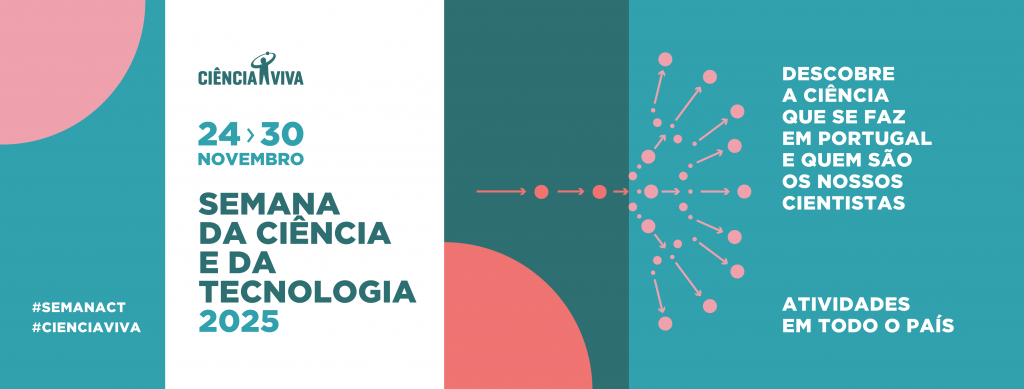
The Science and Technology Week is a nacional initiative of Ciência Viva, which occurs every year, in november, in the scope of the National Day of Scientific Culture, on november 24, and intends to reveal national scientists, what they investigate and their contributions to the improvement of science and the well-being of society.
During this week, all around the country, there will be hundreds of science and technology actions organized by scientific institutions, universities, schools, museums and science centers.
ciTechCare will promote several activities on 24, 25 and 27 november, inviting the community to understand what making science means to us and find out more about different topics such as medical software, physical activity and sleeping or challenges in knowledge transfer in Healthcare.
24th of november
16h – 18h
BRIGHT DAYS – Desafios da Transferência de Conhecimento na Área da Saúde
Auditorium of Campus 5 | Polytechnic of Leiria
Maria Pedro Guarino and Eduarda Fernandes
The session “Challenges of Knowledge Transfer in the Health Sector” aims to promote an open and direct conversation about how research conducted in higher education can get closer to people and create real impact.
The discussion will go beyond theory: researchers from ciTechCare will share real examples of projects developed within the unit, illustrating the path from identifying a problem, developing a technically sound solution, and conducting scientific validation, to facing the challenges of taking that solution further — whether through partnerships, licensing, entrepreneurship, or technology transfer.
The goal is to create an informal space where students, teachers, healthcare professionals, and researchers can reflect on how to bring science and society closer together, what still hinders this process, and which skills are important to develop to make it smoother.
This session, part of Knowledge Circle 2.0, is especially designed for those interested in innovation, applied science, entrepreneurship, or simply in better understanding how an idea arise and grows within the research world until it becomes something capable of changing practices, solving problems, or creating new services in the healthcare field.
25th of november
11h30 – 12h20
Alimentação e Imagem Corporal – Perturbações Alimentares
Basic School D. Dinis
Neuza Barros and Rita Novo
The presentation “Food and Body Image – Eating Disorders” explores the relationship between eating behaviors, body image perception, and the influence of social media, encouraging reflection on risk factors and eating disorders.
The session will also include a brief sharing of what it means to be a scientist, researcher, and nutritionist, highlighting the role of science in understanding and promoting health.
10h30 – 12h20
Como te manteres em forma, informado
Basic School D. Dinis (2 sessions)
Maria João Batalha and Sónia Santos
In this session, Sónia and Maria João will discuss the importance of physical activity and sleep for health, promoting health literacy at younger ages.
27th of november
10h30 – 11h20
Ciência com Sabor: Laboratório das Gomas Sustentáveis
Basic School D. Dinis
Solange Castanheira
In “Science with Flavor: The Sustainable Gummies Lab,” participants will explore how science makes it possible to transform fruits that would otherwise go to waste into tasty and nutritious gummies.
Throughout this hands-on and interactive experience, young scientists will investigate chemical reactions, textures, and food properties, learn about reuse and food sustainability, and finish by tasting the gummies they helped create — combining science, creativity, and environmental responsibility.
17h – 18h
Quando o médico prescreve… um download
Auditorium of Campus 5 | Polytechnic of Leiria
Maria Pedro Guarino
In this session of the Campus 5 o’clock Talk, Maria Guarino, Coordinator of the ciTechCare Research Unit, offers a critical and insightful perspective on what it means to develop and implement software as a medical device.
The session will address the scientific, technological, and regulatory implications that distinguish ordinary software from software that can, in fact, “treat.” This session invites students, professionals, and enthusiasts to reflect on the future of healthcare in a context where digital innovation is not merely a support tool but an active part of treatment.
The challenge is great, but the opportunity is greater: to build a healthcare system that is more precise, more accessible, and more human-centered — through code, knowledge, and science.